

The 3-Second Rule in Retail: How Corrugated POP Displays Capture Shopper Attention
Why the First 3 Seconds Matter at Retail
In retail environments, shopper attention is limited and competition is constant.
Corrugated Point of Purchase (POP) displays play a critical role in influencing decisions at shelf, where engagement often happens within the first few moments of interaction. This is commonly referred to as the 3-second rule.
At Hughes Decorr, this principle informs how POP display programs are developed for real retail conditions. Displays that establish presence quickly and communicate clearly are more likely to influence shopper decisions and drive conversion.
Understanding the 3 Second Rule in Retail Displays
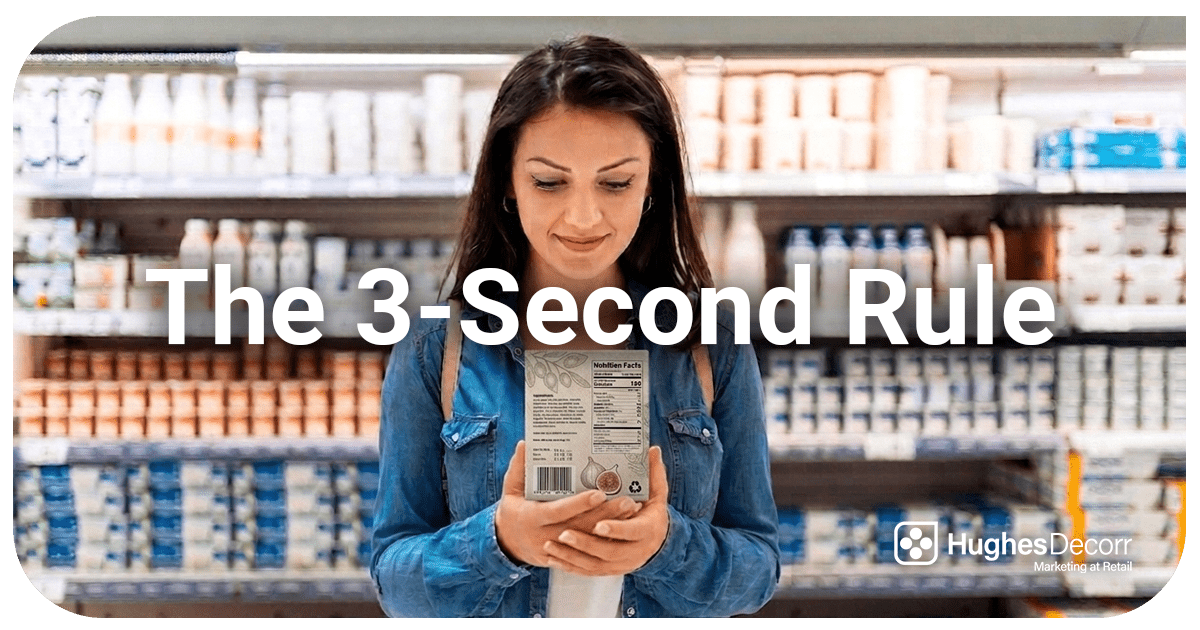
The 3-second rule reflects how quickly shoppers register displays within the retail environment.
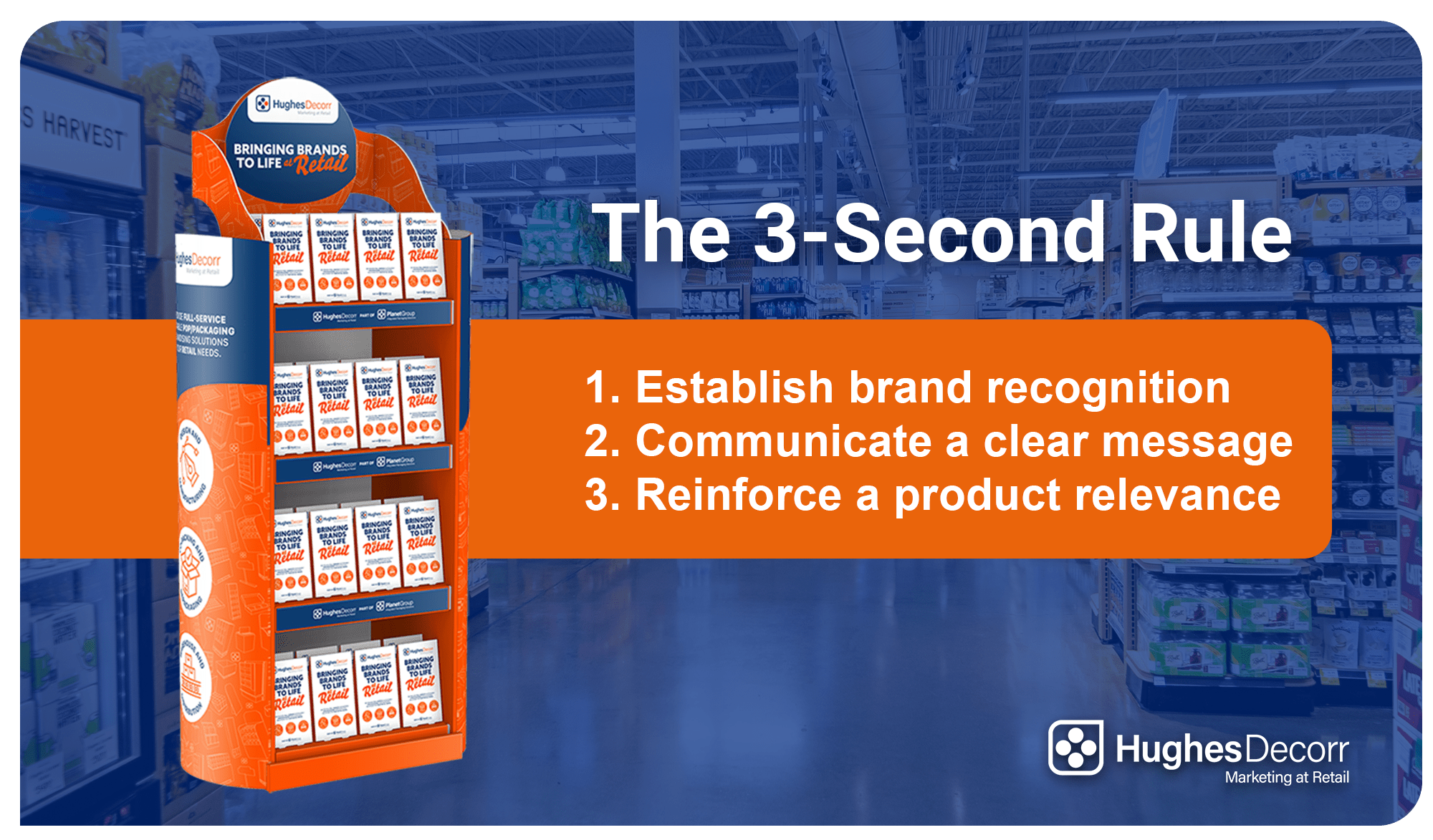
Within this short window, a display must:
- Establish brand recognition
- Communicate a clear message
- Reinforce product relevance
Success depends on how efficiently these elements are understood, especially in environments where multiple programs compete for attention.
At Hughes Decorr, display development is guided by how messaging is received within this timeframe, ensuring programs are built for clarity and immediate impact.
Corrugated Displays in the Path to Purchase
Corrugated displays play a unique role within the path to purchase by combining structure and communication.
At Hughes Decorr, display programs are developed to ensure that:
- Structure creates presence
- Graphics communicate clearly
- Placement aligns with shopper flow
This integration allows displays to function as both a physical and visual touchpoint within the retail environment.
Designing for Speed of Understanding
Designing for the 3-second rule is about prioritizing clarity over complexity.
At Hughes Decorr, development focuses on how quickly a message can be understood at shelf and how effectively it guides shopper interaction.
Message Hierarchy
Information must be structured so that primary messaging is immediately visible, with supporting details revealed as shoppers move closer.
Structural Impact
Displays introduce physical presence within the aisle, helping programs stand out within noisy retail environments.
Visual Simplicity
Clear layouts and controlled use of design elements reduce visual noise and improve readability.
Product Interaction
Displays must support intuitive product selection, ensuring the transition from attention to action is seamless.
Evaluating Displays in Real Retail Conditions
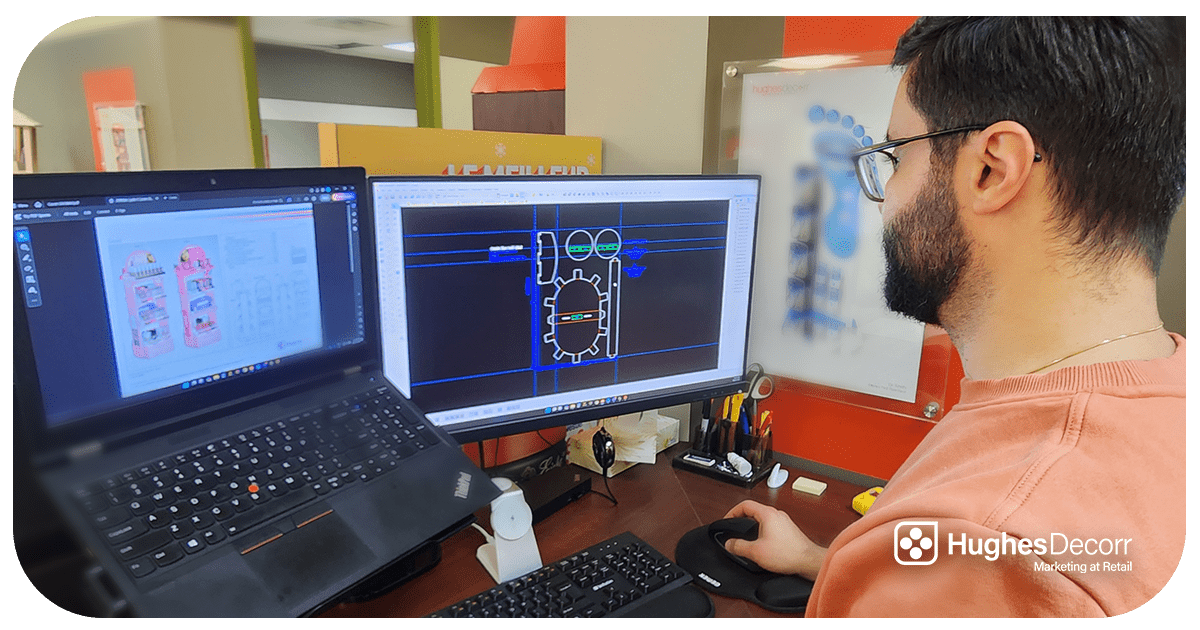
Effective display design cannot be fully assessed in isolation. At Hughes Decorr, POP display validation ensures that performance is evaluated within real retail context before production begins.
Key factors include:
- Shopper flow and movement
- Viewing distance and sightlines
- Competitive adjacency
- Full-scale structural presence
This process ensures that displays align with how shoppers interact with them in-store.
The Hughes Decorr Retail Innovation Lab
The Retail Innovation Lab at Hughes Decorr provides a controlled environment to simulate real retail conditions.
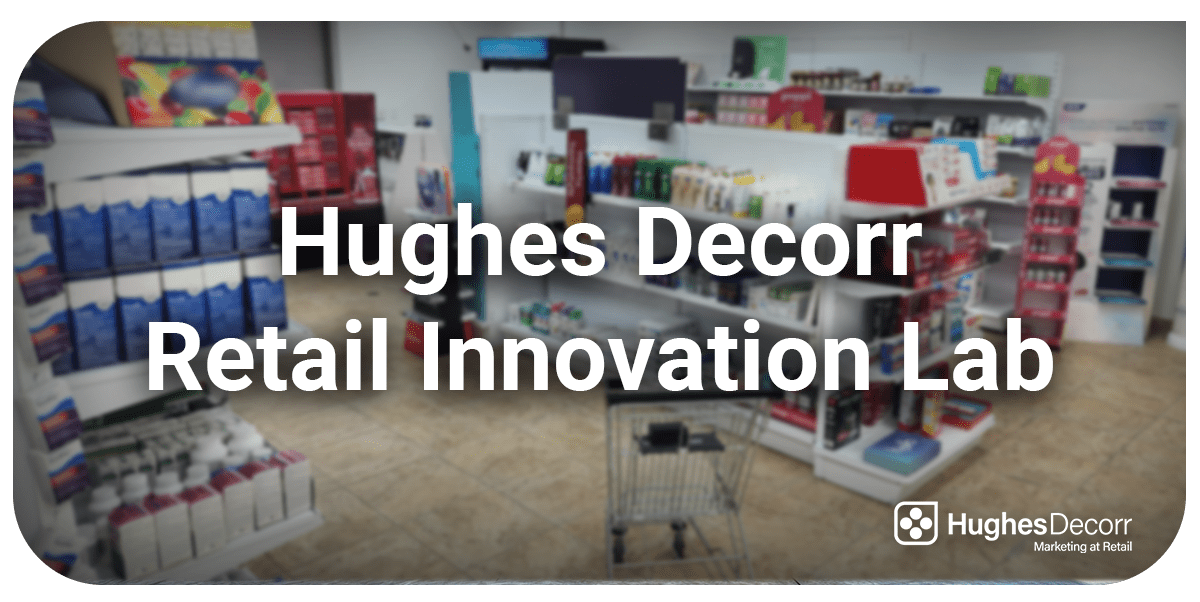
Within this space, brands can:
- Compare displays against competing programs
- Evaluate visibility from multiple angles
- Assess message clarity at distance
- Experience displays from a shopper perspective
This environment allows teams to make informed decisions before committing to production.
From Attention to Action
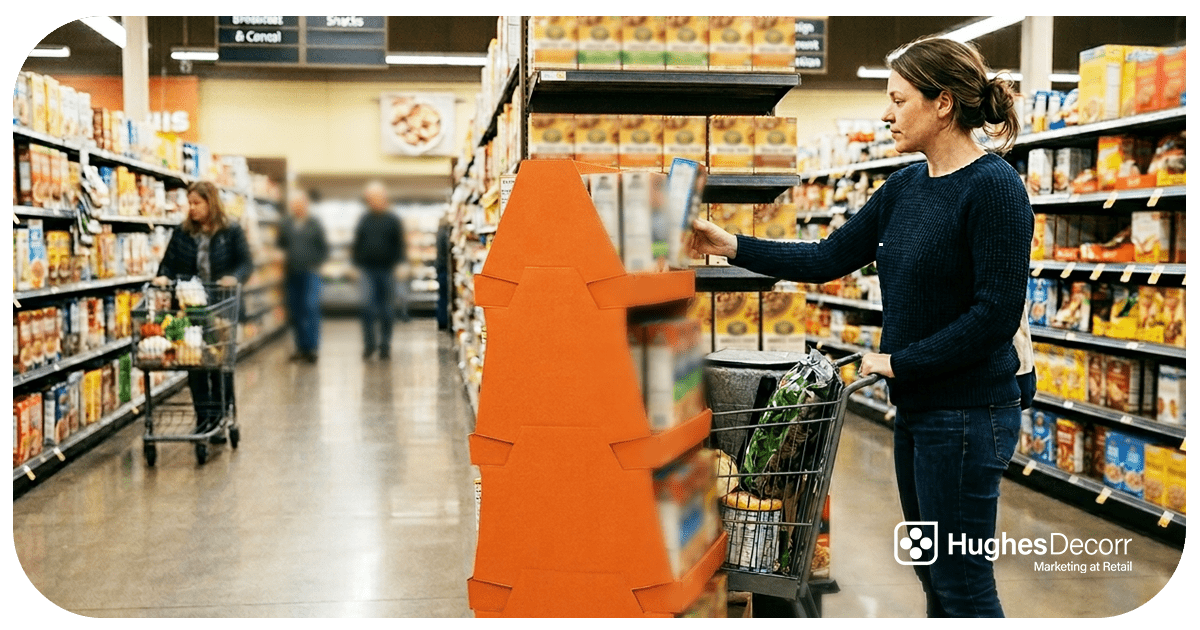
Capturing attention is only one part of the equation. Displays must also guide the shopper toward a decision by reinforcing key messages and making product selection straightforward. Programs that align structure, messaging, and placement are better positioned to support this transition.
From Validation to Execution
Structured validation supports more consistent and effective rollout across retail environments.
By working with Hughes Decorr, brands gain clearer insight into how their displays will perform before they reach the store floor. This approach strengthens execution and reduces uncertainty in the final program.
Ready for Retail Execution
If your corrugated POP display programs have not been evaluated within real retail conditions, there may be opportunities to improve clarity, visibility, and overall performance.
Connect with Hughes Decorr to evaluate how your next program can be developed to perform within the first few seconds and throughout the in-store experience.

Stay Connected With Us