
Why Your POP Display and Packaging are Your Most Underrated Marketing Channels

The Decision Happens Before the Ad Does
Brands invest significantly in advertising, social media, and shopper marketing to drive awareness and purchase intent. But for most CPG products, none of those channels are present at the moment that matters most, when a shopper is standing in the aisle, deciding what to pick up.
At that moment, your point-of-purchase display and packaging are doing all the work. They are the only brand assets physically present at the point of sale. In most cases, they are still being treated as production requirements rather than marketing investments.
That gap is where brands are leaving real sales on the table.
What Happens at the Shelf Stays at the Shelf
Research consistently shows that a significant share of purchase decisions, including brand switches, happen in-store, at the shelf or display. Shoppers move quickly, category competition is dense, and attention windows are short. A display or package that fails to stop, engage, and convert a shopper in that window doesn’t get a second chance.
Effective POP displays and packaging design help brands:
· Stop shoppers in their path-to-purchase and generate dwell time
· Communicate a product’s value proposition in 3-7 secconds
· Differentiate clearly from adjacent competitors on the same shelf
· Reinforce the brand story already built through advertising and digital
· Drive product trial among shoppers who had no prior purchase intent
None of these outcomes happen by accident. They are the result of deliberate design decisions, structural, graphic, and strategic, made long before the display hits the floor.
Why Most Brands Underinvest Here
The most common mistake brand and trade marketing teams make is evaluating display and packaging programs on unit cost alone. Cost per display is a real number that is easy to defend in a budget review. Shopper conversion lift is harder to isolate and even harder to bring into a boardroom conversation.
The result is a systematic underinvestment in the one marketing channel that is present at every single purchase moment.
The more useful frame is product velocity, how quickly your product moves off the shelf relative to what it would move without effective display support. A display program that costs more per unit but meaningfully improves sell-through delivers a better return than a cheaper program that blends into the fixture. That’s not a design argument. It’s a business case.
How Does a POP Display Actually Influence Shopper Behaviour?
Shopper marketers refer to this as the First Moment of Truth (FMOT), the in-store encounter between a shopper and a product that determines whether a purchase happens. FMOT is where advertising investment either pays off or doesn’t. Every other channel has been building toward it. What happens at that moment is determined almost entirely by display and packaging design decisions made months earlier.
A well-designed POP display works across three shopper moments: interruption, engagement, and conversion.
Interruption
Interruption is about stopping movement. Structural height, colour contrast, and placement position all determine whether a shopper’s eye lands on your display or bypasses it entirely. This is measurable, visual attention research can model where shoppers look and for how long, before a single unit is produced.
Engagement
Engagement is about communicating quickly. Once you have a shopper’s attention, you have seconds to communicate what the product is, why it’s relevant, and why it’s worth picking up. Messaging hierarchy, panel layout, and graphic execution all drive this. A display that requires a shopper to work to understand the product has already been lost.
Conversion
Conversion is about removing friction. Clear pricing, intuitive product access, and secondary messaging that reinforces the purchase rationale, these structural and graphic decisions close the sale. They also influence whether a shopper picks up one unit or more than one.
Understanding how these three moments connect, and designing displays that perform across all three, is what separates a display program that ships on time from one that actually moves product.
What is the HD360 Process?
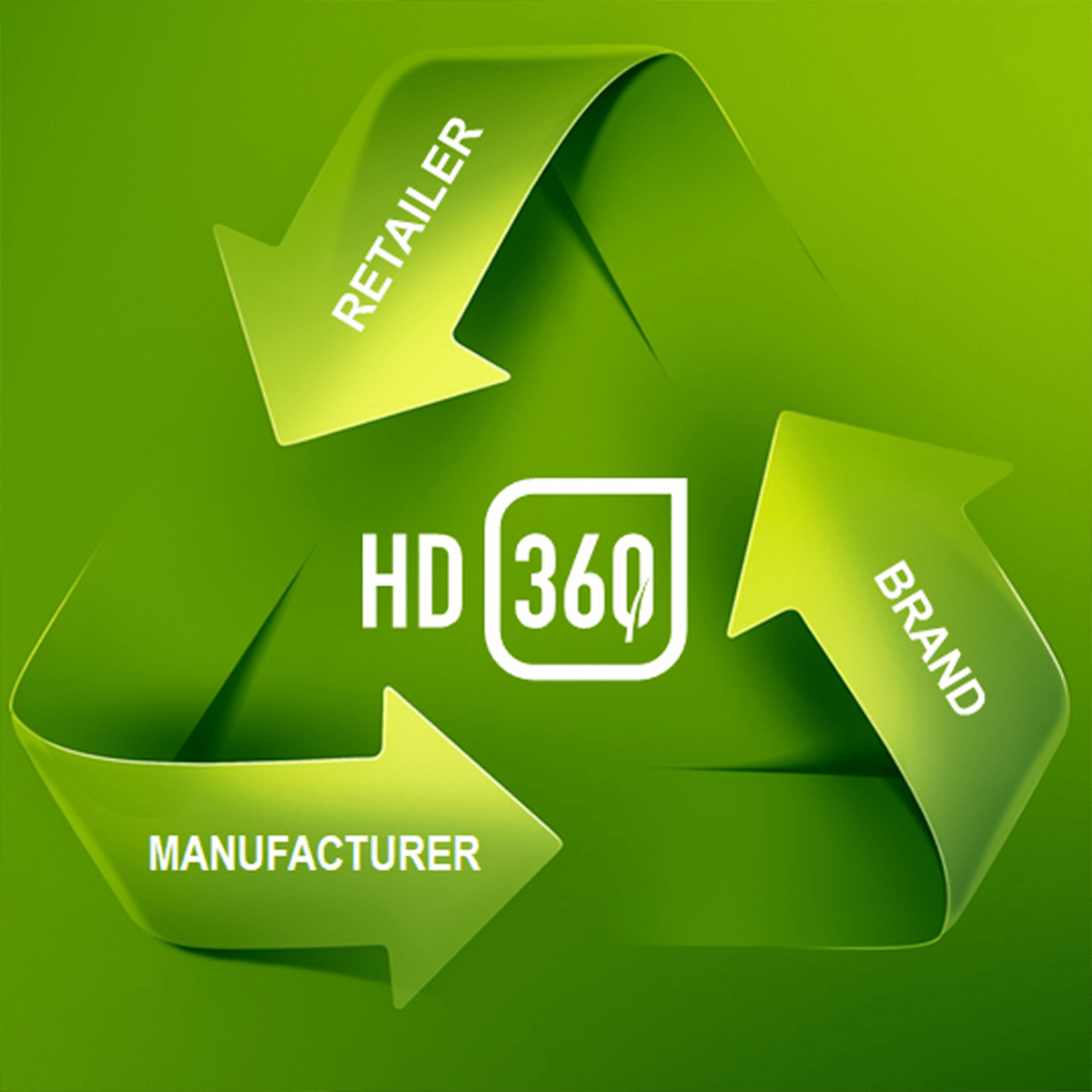
At Hughes Decorr, POP display and packaging programs are developed through the HD360 process, a cross-functional approach that considers brand objectives, retailer requirements, shopper insights, sustainability goals, structural engineering, and manufacturing realities together, from the earliest stage of a program.
Most display programs fail not because of a single bad decision, but because brand, design, sustainability, and operations teams work in sequence rather than in parallel. A structural concept gets finalized before sustainability materials are evaluated. A graphic direction gets approved before retail compliance requirements are checked. By the time manufacturing begins, the compromises are already baked in.
HD360 is designed to prevent that. By integrating Science, Art, and Engineering from the start, consumer insight, creative design, and structural and manufacturing expertise working together, the process ensures that the display or packaging that ships to retail actually performs the way it was intended to.
The HD360 process covers brand and shopper strategy, structural design, material selection, sustainability assessment (including Life Cycle Assessment), retailer compliance, and supply chain execution. It is not a checklist. It is a discipline applied across the full program lifecycle.
What is the Retail Innovation Lab and Why Does It Matter?
Here is a structural problem that most brand and trade marketing teams have encountered: the decision to approve a display program is made in a boardroom, but the display performs in a retail environment. Those are two very different contexts, and the gap between them is where a lot of good programs go wrong.
The Hughes Decorr Retail Innovation Lab was built to close that gap. It is a proprietary Centre of Excellence that brings the retail environment into the decision-making process – physically, virtually, and analytically before production begins.
We built the EcoPackLock™, a proprietary multi-pack locking system made from recycled corrugated material that eliminates plastic handles entirely, proof that structural engineering and sustainability can move in the same direction instead of trading off against each other.
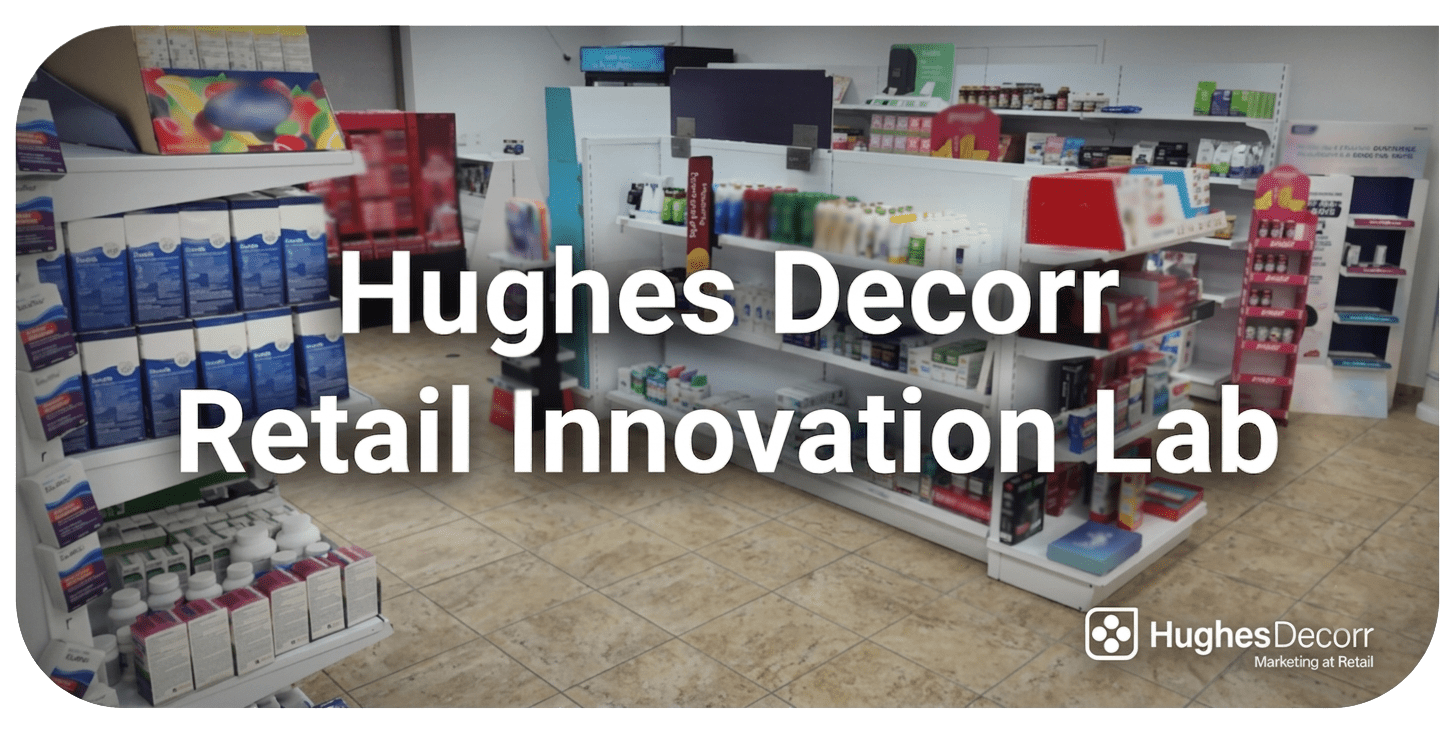
The Lab includes a physical retail store experience, a virtual shopper environment, 3D imaging, visual attention research, and visual predictability modeling. This means a brand team can evaluate a display concept against real retail conditions, shelf adjacency, sight lines, lighting, competitive context and make data-informed adjustments before committing to tooling and production.
The practical impact is significant. Programs that go through the Lab arrive at retail with higher confidence in their performance because the variables have already been tested and resolved. Fewer surprises. Fewer post-launch corrections. Better results at the shelf.
For shopper marketing and trade marketing teams managing complex retail programs across multiple banners and formats, this capability is directly relevant to how confidently they can commit to a program and defend it internally.
Packaging as the First Moment of Truth
If the POP display stops the shopper and drives them to the fixture, the package closes the sale. Packaging design that is misaligned with the display, in visual language, messaging hierarchy, or structural cues, creates a moment of hesitation at exactly the wrong time.
When structural design, graphics, and brand messaging work together across both the display and the package, the brand experience is continuous. The shopper moves from interruption to conversion without friction. That continuity is not always visible to consumers, but its absence always is.
Hughes Decorr designs POP displays and packaging as connected programs, not separate deliverables. The HD360 process applies equally to packaging, integrating retailer requirements, sustainability objectives including LCA validation, structural performance, and brand strategy into a single coordinated program.
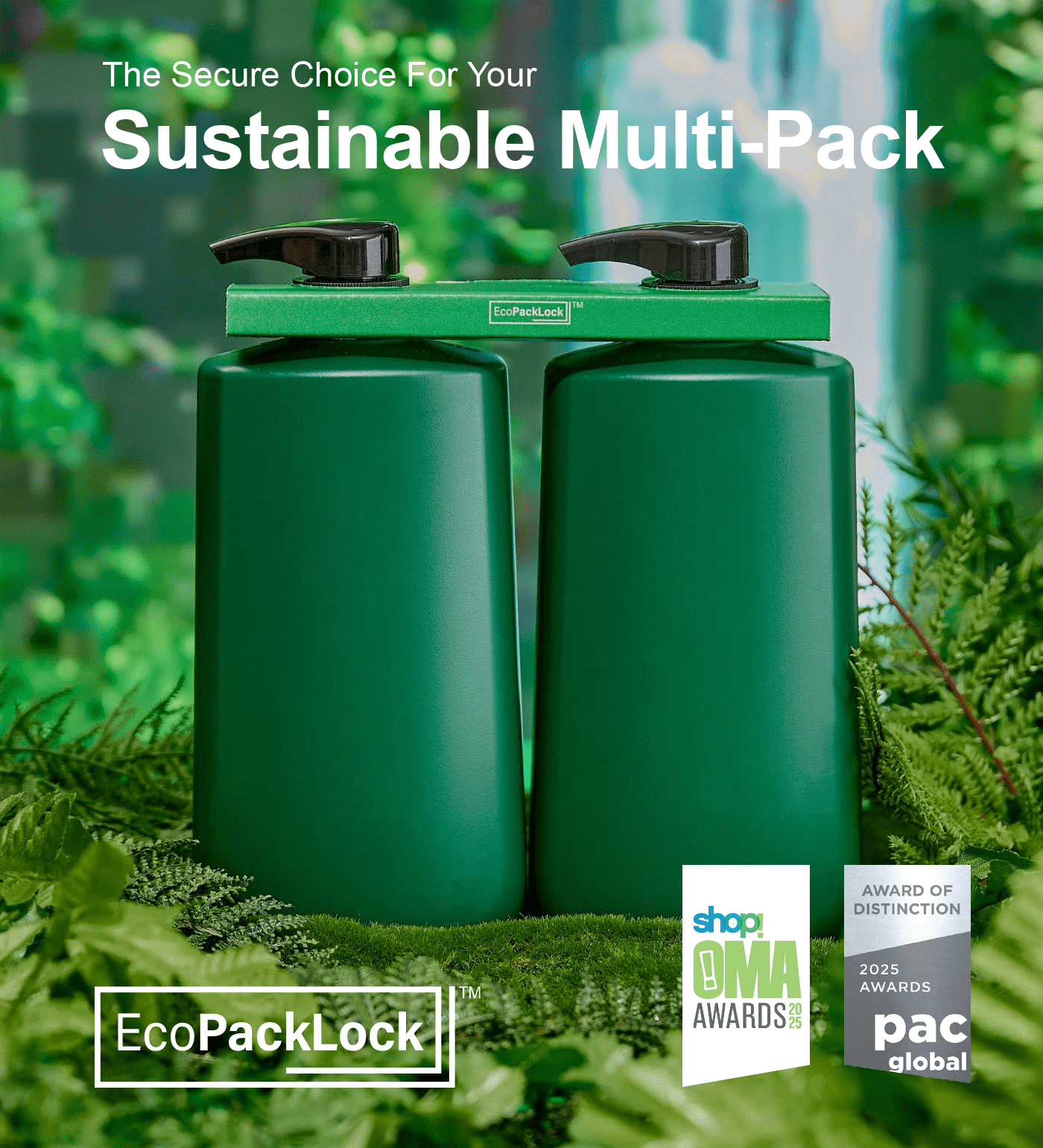
For brands working toward specific sustainability commitments, packaging design decisions also carry long-term implications. Hughes Decorr’s EcoPackLock™ – a proprietary corrugated multi-pack locking system made from recycled material that eliminates plastic handles – is an example of how structural innovation can simultaneously serve brand, retailer, and sustainability objectives without compromising shelf performance.
The Strategic Case for Taking This Seriously
POP displays and packaging are not support materials for your marketing strategy. For most CPG brands in physical retail, they are the marketing strategy at the moment of purchase. Every other channel, advertising, digital, social, influencer, is building toward the moment when a shopper stands in front of your product.
What happens at that moment is determined by decisions your display and packaging team made months earlier. Brands that treat those decisions as strategic, that invest in the right design process, test concepts against real retail conditions, and align display and packaging programs around shopper conversion, are consistently better positioned at retail than those that optimize for unit cost alone.
The difference shows up in sell-through. It shows up in trial rates. And it shows up in whether a retailer gives your program more floor space next season or less.
Connect with Hughes Decorr
Hughes Decorr works with CPG brands, retailers, shopper marketing teams, and trade marketing teams to develop POP display and packaging programs that perform at retail – from concept through to execution.
To learn how the HD360 process and the Retail Innovation Lab can support your next program, get in touch.

Stay Connected With Us